Innovation in Education
Market Intelligence for the 2027/28 Procurement Cycle
THEME: INNOVATION IN EDUCATION
Africa’s emerging innovation economy starts with education, skills and research, with African governments and continental institutions then wishing to connect the education ecosystem with innovation, entrepreneurship, employment and industrialisation. Science, technology and innovation (STI) are at the centre of transformation to build human capacity. Innovation Africa 2027 will comprise of several sectoral themes reflecting the national priorities and procurement cycle of African governments.

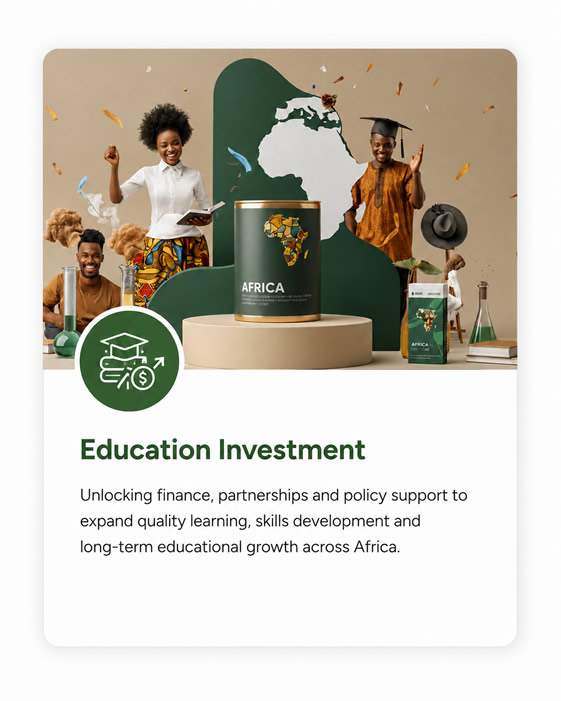
EDUCATION INVESTMENT
Africa's education market is entering a new phase of development, principally concentrated principally on access to education, towards investment and partnerships that produces measurable outcomes.
African governments are committed to improving foundational learning, modernise curricula, expand TVET and tertiary capacity, digitise teaching, improve teacher quality and incorporate artificial intelligence into education.
2027/28 Market Signals
- Digital education is moving from pilot projects to national infrastructure.
- Skills investment is becoming explicitly connected to jobs.
- TVET is being repositioned as economic infrastructure.
- Curriculum reform is becoming a technology market.
- AI in education is likely to be the fastest-growing individual technology vertical.
- Higher education is being linked more closely to industrial policy.
- Education procurement is becoming increasingly ecosystem-based.
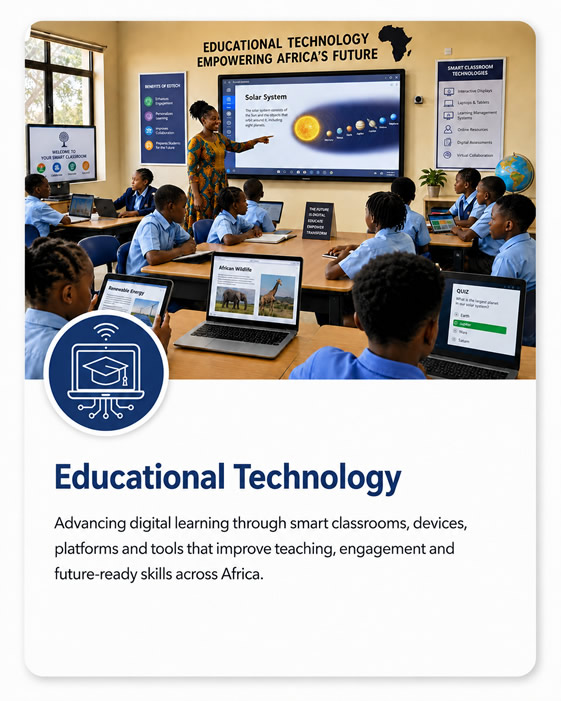
EDUCATIONAL TECHNOLOGY
The current African EdTech is approximately $8.2 billion in 2026, defined by: learning platforms; digital content; educational software; classroom technology; administrative technology; assessment; devices and related education solutions.
Business & Partnership Opportunities
With an annual growth rate of between 11.3% and 14.6% the market is expected to reach ~ $13.9 billion by 2031, with a conservative estimate of $2 billion of additional annual edtech demand created between 2026 and 2028. Opportunities include:
- Nationwide national learning platforms and learning management systems (LMS).
- Adaptive learning platforms and digital assessment with analytics.
- Ecosystem-styled school connectivity. Strong propositions required for bringing together connectivity + content + devices + service.
- Adaptive learning platforms that adjust difficulty automatically are particularly attractive in systems with extremely wide variation in learning levels.
- Localised digital content. Curriculum alignment and African-language content increasingly matter alongside the international content libraries.
- Low-bandwidth applications, downloadable content, and increasing demand for edge servers.
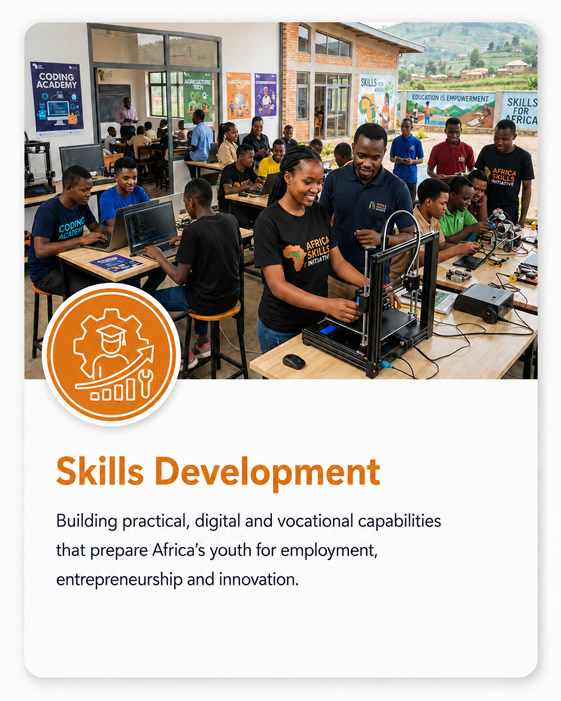
SKILLS DEVELOPMENT
For 2027–2028 we will witness a change from "education for qualifications" to "education for employability;" as skills development represents one of Africa's largest human-capital investment themes.
Business & Partnership Opportunities
The African Development Bank is preparing a new continent-wide Youth, Skills and Jobs Action Plan 2027–2033 and the World Bank SET4Jobs program runs over eight years, expecting to benefit 18 million young people by 2034.
The skills development market that spans youth-employment programs, digital-skills and blended skills platforms, entrepreneurship training, professional certification and workforce development is forecast to grow 12% – 15% annually through 2031, taking the commercially addressable skills-development market to $9 - $13 billion annually. Opportunities include:
- Skills intelligence platforms, capable of connecting training with workforce demand.
- Certification and assessment, offering governments evidence that programs deliver relevant competencies.
- Industry-aligned academies, supporting African Governments’ desire to have employers more involved in curriculum design and certification.
- Employer-recognised qualifications in cloud, networking, software, cybersecurity & AI.
- Training-as-a-Service platforms capable of enrolling and tracking of learners.
- Digital apprenticeship platforms linking institutions, employers and learners.
CURRICULUM AND ASSESSMENT REFORM
Curriculum reform has become one of the most important education procurement markets in Africa, with every change producing a purchasing chain of content, textbooks, teacher training, assessments, software and data.
Business & Partnership Opportunities
A major catalyst for growth is the new Continental Assessment Framework for Africa, designed to harmonise measurement of foundational reading and mathematics across African Union member states. UNESCO's Africa-focused learning analysis finds that only 10.8% of children achieve minimum proficiency in reading and mathematics by the end of primary education.
The curriculum reform market is growing 10% – 14% annual, with the market reaching up to $3.0 billion annually by 2031. Opportunities include:
- Competency-based curriculum development, already in many African countries.
- Digital and continuous assessment represents the fastest growing component of reform.
- Curriculum-aligned digital content, including design and consultancy.
- Computer-based testing & automated marking is now entering into the policy frameworks of African ministries of education and higher education.
- Foundational literacy and numeracy assessment is urgently being addressed to increase national proficiencies.
- Teacher training and retooling necessary to deliver on the competency-based curriculum reform.
TVET
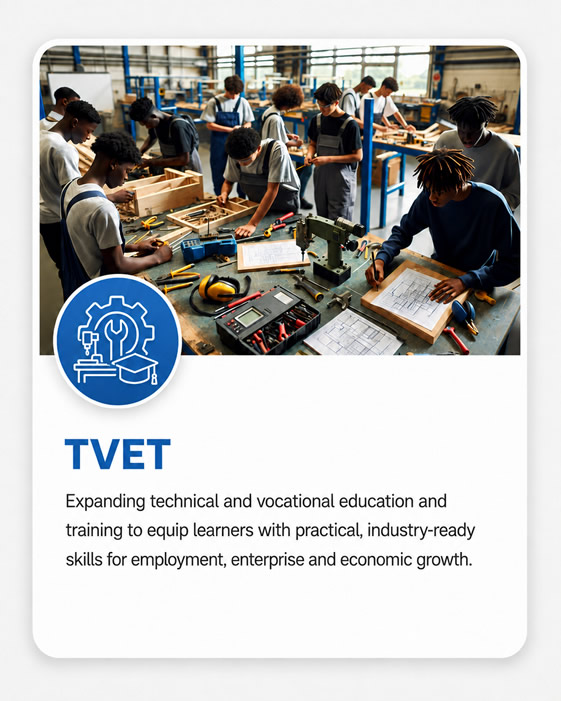
TVET has moved to the centre of African economic policy. The next generation of TVET investment is an urgent necessity in response to demographic growth and youth unemployment as governments attempt to connect training directly with industria and workforce demand.
Business & Partnership Opportunities
TVET is among the strongest verticals during 2027–28 and although public summaries do not disclose continent-wide dollar values, the large multilateral investment pipeline and government expenditures indicate an African TVET supplier market growing by 12% – 16%, annually creating a potential $5.5 – $9 billion market by 2031.
The most rapid growth should occur in technical and vocational equipment, digital simulation, laboratories, educational software, industry certification and modern competency-based programmes. Opportunities include:
- Industry-standard laboratories and workshops with installed equipment.
- Robotics and industrial automation, with associated training and certification.
- Priority sectoral technologies, notably in agriculture, energy and healthcare.
- Digital fabrication and 3D printing are explicitly within the World Bank's regional TVET model for competency-based training and assessment.
- Training-of-trainer programs and increased development of local talent along with digital apprenticeship platforms.
DIGITAL LEARNING
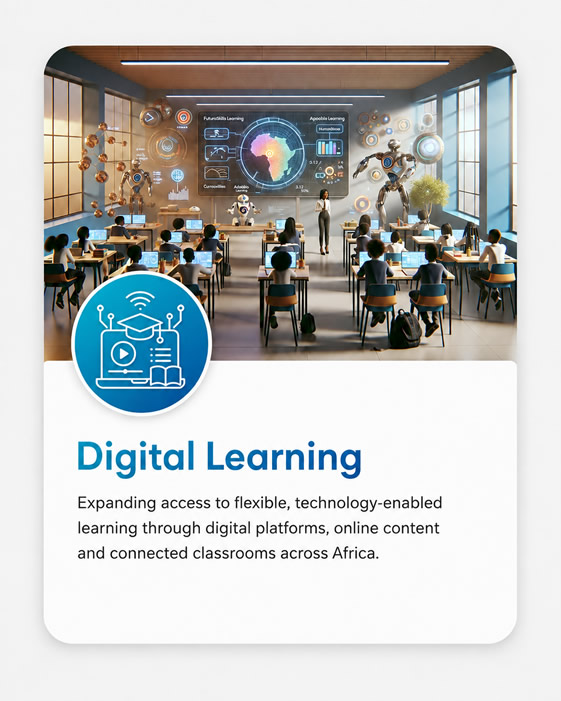
Digital learning and literacy overlaps with edtech but represents a separate government-policy market for developing the system-wide ability of students and teachers to use technology effectively. This distinction matters commercially because ministries increasingly procure digital-literacy programs independently of edtech products.
Business & Partnership Opportunities
Industry forecasts average an approximately 12% annual growth in the digital learning sector, implying a $6.5 – $7.5 billion market in 2031. The strongest expansion should come from public-sector adoption.
UNICEF's Digital Education Strategy 2025–2030 particularly emphasises closing inequalities associated with gender, disability, language, geography and out-of-school learners. Opportunities include:
- National digital literacy curricula developed in readiness for national learning management systems implementation.
- School connectivity is increasing rapidly as a matter of policy (especially since Covid), led by the greater availability of fibre and satellite technologies.
- Laptops and tablets see continuing demand across sub-Saharan Africa, notably in supporting teacher digital-pedagogy training and digital-skills assessment.
- Indigenous African content and language is a major part of African governmental policy with the need for more local digital content repositories.
- Inclusive technology along with safeguarding and data safety.
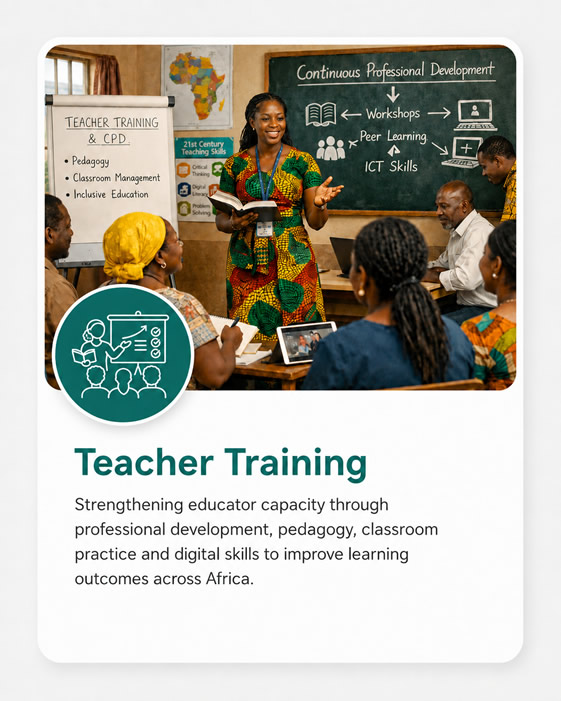
TEACHER TRAINING & CPD
Teacher development may ultimately become one of the largest recurrent education markets in Africa as teacher numbers expand rapidly. Using teacher numbers and public education expenditure the African teacher-training market is estimated at $700 million – $1.0 billion. Made up of: initial professional training, in-service training, digital pedagogy, subject upgrading, AI training, leadership development, and curriculum-reform training.
Business & Partnership Opportunities
Africa should substantially outperform the mature global teacher-professional development market, forecasted at 12% – 15% annual growth. UNESCO's estimate that Sub-Saharan Africa alone will need 15 million additional teachers by 2030.
The acceleration in teacher training and continuous professional development (CPD) in Africa is because of acceleration in the convergence of competency-based curricula, digital pedagogy, artificial intelligence. Opportunities include:
- National teacher-learning platforms and CPD management systems.
- AI competency training for teachers along with digital pedagogy.
- STEM teacher development and the need for considerable improvement in foundational mathematics.
- School leadership training and teacher communities of practice.
- Training-of-trainers systems, supported by instructional coaching platforms.
- Classroom observation and data analytics.
STEM & TERTIARY EDUCATION
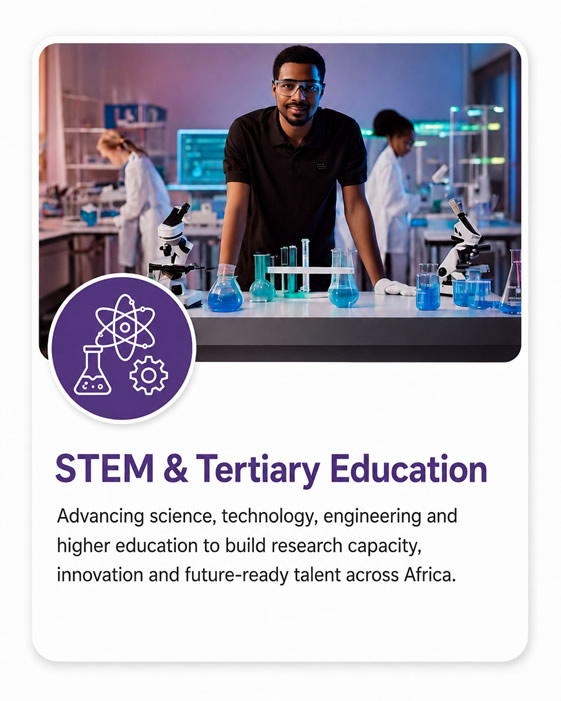
A 2026 World Bank diagnosis reports that Africa needs approximately 23 million additional STEM graduates by 2030, as Africa faces a capacity problem in tertiary education, with enrolment needing to expand substantially, and more graduates entering fields aligned with future economic demand.
Business & Partnership Opportunities
For a supplier-oriented definition of STEM laboratories, equipment, higher-education technology, software, research equipment, training and associated services, we give an estimate of a current commercially addressable STEM and tertiary technology market of $4 – $6 billion.
Africa's demographic trajectory makes expansion structural with an addressable market of $7 – $12 billion by 2031. The World Bank's current tertiary work also demonstrates significant institutional scale: its African Higher Education Centres of Excellence initiatives have trained more than 90,000 students, including over 7,600 PhDs and around 30,000 master's graduates. Opportunities include:
- STEM laboratories and engineering equipment.
- Research computing, scientific software, management platforms and AI infrastructure.
- Sectoral specific training technologies in agriculture, energy, medical and health-science training.
- University connectivity, campus networks and national research and education networks (NRENs).
- Tertiary education management systems, digital libraries and scientific publishing.
- STEM teacher education and training.
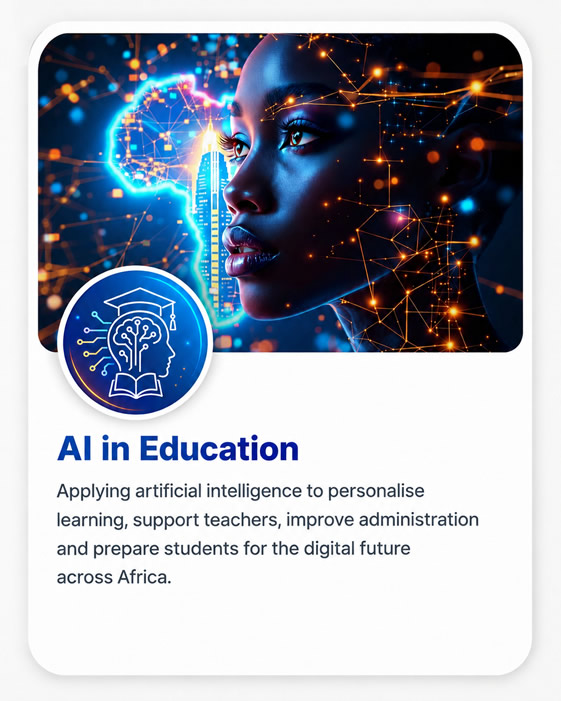
AI IN EDUCATION
This fast growing vertical has two dimensions: AI for education — tutoring, assessment, lesson planning, administration and personalised learning; and Education for AI — preparing teachers and students to understand and use artificial intelligence. The wider African AI in education market is currently estimated at around $400 million, with expected annual growth exceeding 27% to 2033.
Business & Partnership Opportunities
African governments are now moving from the question of whether AI should be allowed in education to "How do we safely integrate AI into the education system?" We are witnessing a rapid acceleration in AI-enabled edtech pilots, with current World Bank programs including adaptive learning in Côte d'Ivoire, Gambia and Mali, AI tutors in Ghana, teacher solutions in Ethiopia and youth-skills initiatives in Tanzania and Mauritius.
A significant finding from Nigeria, found that students participating in a program combining generative-AI tutoring with teacher guidance achieved learning gains equivalent to roughly 1.5 to 2 years of typical schooling in six weeks. Procurement will increasingly require safeguards, emphasising age appropriateness, teacher supervision, data protection and cultural relevance. Opportunities include:
- AI tutoring and AI-assisted assessment, requiring significant investment in Teacher AI certification.
- Automated lesson planning & marking, embedding with school management systems.
- Adaptive learning to support the growth in AI literacy curricula.
- Academic-integrity and proctoring software.
- Student safeguarding, data privacy, oversight of misinformation & disinformation and AI governance.
- African-language education models and an urgent demand for LLMs to be substantially more trained on African indigenous content.
- Urgent increase in the demand for university research compute and AI laboratories.